
Best before date vs use by: what can you sell?
One date is a quality promise, the other a safety limit



Maurice KoningsCOO
6 min read
Trade, logistics and documentsSay a seller offers 10 pallets of canned tomatoes. The listing shows the quantity and the best before date, but no batch. Should you ask for it? This article covers food and drink.
A batch number is a code that a producer prints on the packaging to identify the production run it came from. All units from one run carry the same code. If one unit has a defect, the code shows which other units may share it.
EU law describes the idea from the other side. Directive 2011/91/EU (opens in a new tab) defines a lot as "a batch of sales units of a foodstuff produced, manufactured or packaged under practically the same conditions".
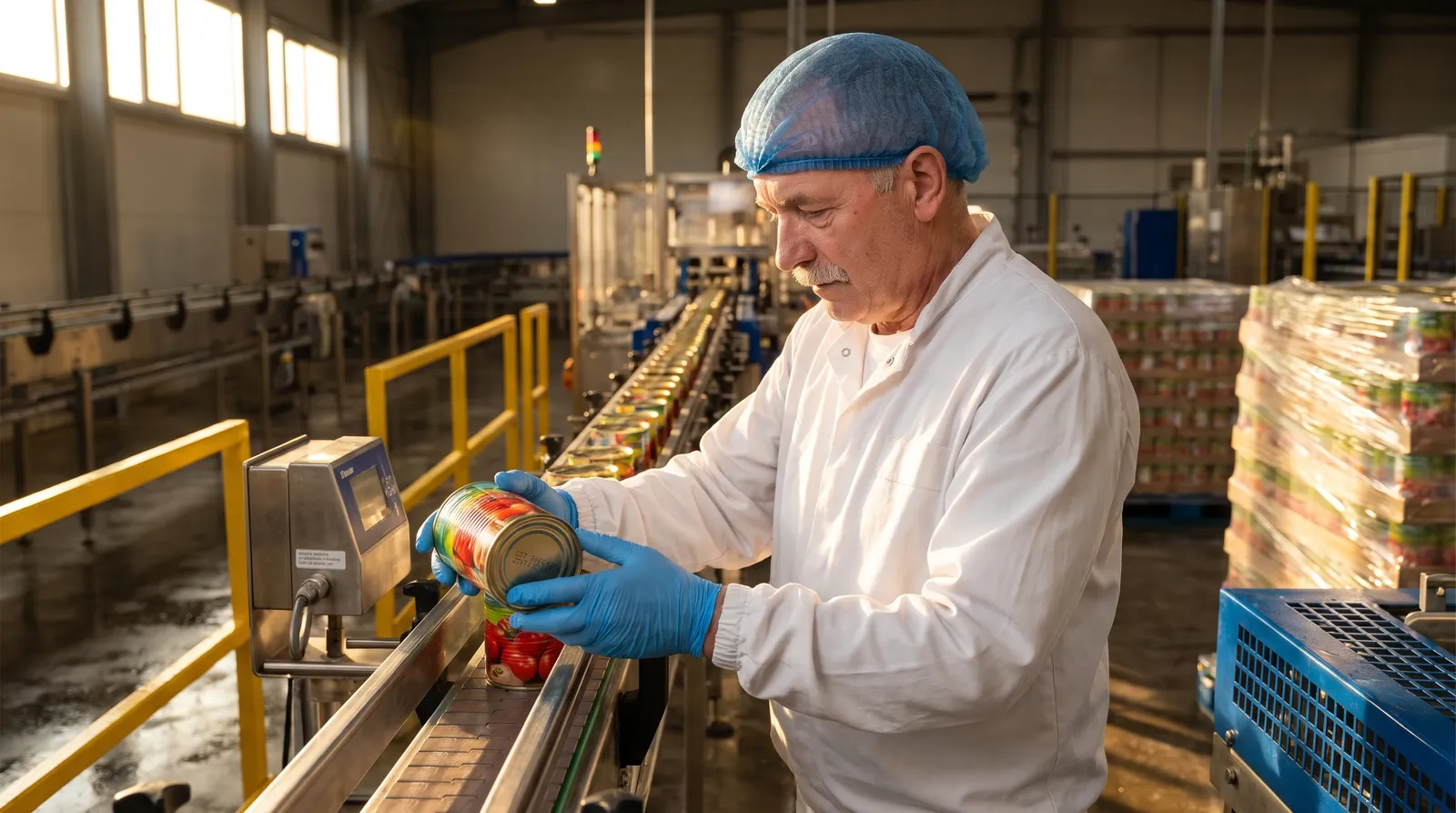
In the food trade there is no practical difference, because batch number and lot number identify the same code. The directive uses the word lot, and trade lists often use batch. I treat the two words as identical and ask for the code by either name.
In this trade a lot can also mean the whole consignment for sale. The code on the packaging is a different thing.
The EAN (European Article Number, the number under the barcode) identifies the product, not the run. Two batches of the same biscuits share one EAN and carry two batch numbers.
The directive says who sets the code. Under Article 3, the producer, manufacturer or packager sets it. So can the first seller established in the Union.
Traceability matters because a buyer who cannot identify the batch of a pallet cannot respond when that batch is recalled. A recall is the removal of unsafe food from the market. Regulation (EC) No 178/2002 (opens in a new tab), the EU general food law, sets the frame. Article 18 says traceability of food "shall be established at all stages of production, processing and distribution". Food businesses must be able to identify who supplied them and which businesses they supplied.
Imagine a Belgian wholesaler holds 6 pallets of canned tomatoes from two batches. The producer recalls one batch. With the batch number on the delivery note, the wholesaler quarantines 2 pallets and sells the other 4. Without it, all 6 pallets remain blocked until someone reads the codes on the cartons.
Article 19 covers withdrawal. A food business that has reason to believe its food does not meet the food safety requirements must start withdrawing it and inform the authorities. A batch number turns that withdrawal into an exact list of pallets. As a buyer, you match the recall notice to your pallet codes and quarantine those pallets.
For a stock lot, I want these details in the listing (the seller's offer) and on the delivery note:
| Listing detail | Why the buyer asks for it |
|---|---|
| Batch numbers per pallet | Lists every production run on the pallet, so a recall maps to known pallets |
| Best before date per batch | Sets the weeks left to resell. One lot can hold batches with different dates |
| EAN | Identifies the product. It does not identify the run |
| Quantity per batch | Shows how much stock a recall would hit |
| Delivery note with the batch | Lets the buyer prove which batch arrived |
My rule follows from the table: no batch number, no deal. When the packaging shows only a day-and-month date as its lot code, I ask for the production run in writing. One date can cover several runs. A seller who cannot identify the run behind the goods is selling me untraceable stock.
The batch number is printed on the packaging itself, often next to the best before date. Look at the lid, the base or the side panel. The code is preceded by the letter L, unless it is clearly distinguishable from the other details on the label. Directive 2011/91/EU adds that it must be "easily visible, clearly legible and indelible".
Suppose a German buyer receives 8 pallets of long-life oat drink and finds two codes on the cartons. That is normal when a lot combines batches. Compare both codes with the listing and the delivery note.
Stocklots.ai is in alpha. Its buyer page lists the EAN, quantities, best-before date and batch among the data points per lot. You can see which details a buyer checks on every lot before you buy.
I would not buy food stock without a batch number, even when the packaging shows a date that could replace it. Without the code I cannot trace the goods, and then I cannot withdraw them in a recall.
Sometimes you need no separate lot code. That applies when the packaging shows the best before date or the use by date with at least the day and month, written plainly and in that order. That is Article 5 of Directive 2011/91/EU. One date can cover several runs, so I still ask. If the pack shows only a month or a year, ask the seller for the batch.
No. A batch number is shared by every unit from one production run. A serial number identifies a single unit.
Want more of our articles in your Google results? Add Stocklots.ai as a preferred source (opens in a new tab).
One date is a quality promise, the other a safety limit
A lot's minimum order sets how much cash and shelf space you commit
A week-by-week buying plan for festive lots
Join Stocklots.ai and get early access to the marketplace.